Particle Image Velocimetry for Improving Drone Design
At the Hybrid Dynamic Robotics Lab – Carnegie Mellon University
We won a grant to experiments on the uses of Particle Image Velocimetry to study the aerodynamic effects of drones near surfaces to see if we could improve the design.
Since we did not have a lab at the university we had to convert the basement of our house into our research lab. After procuring a high power laser and 3D printing some custom rig parts – which involved a crystal holder, a piece to attach the drone to a tripod, and a nozzle for our fog machine, we were ready to begin testing.
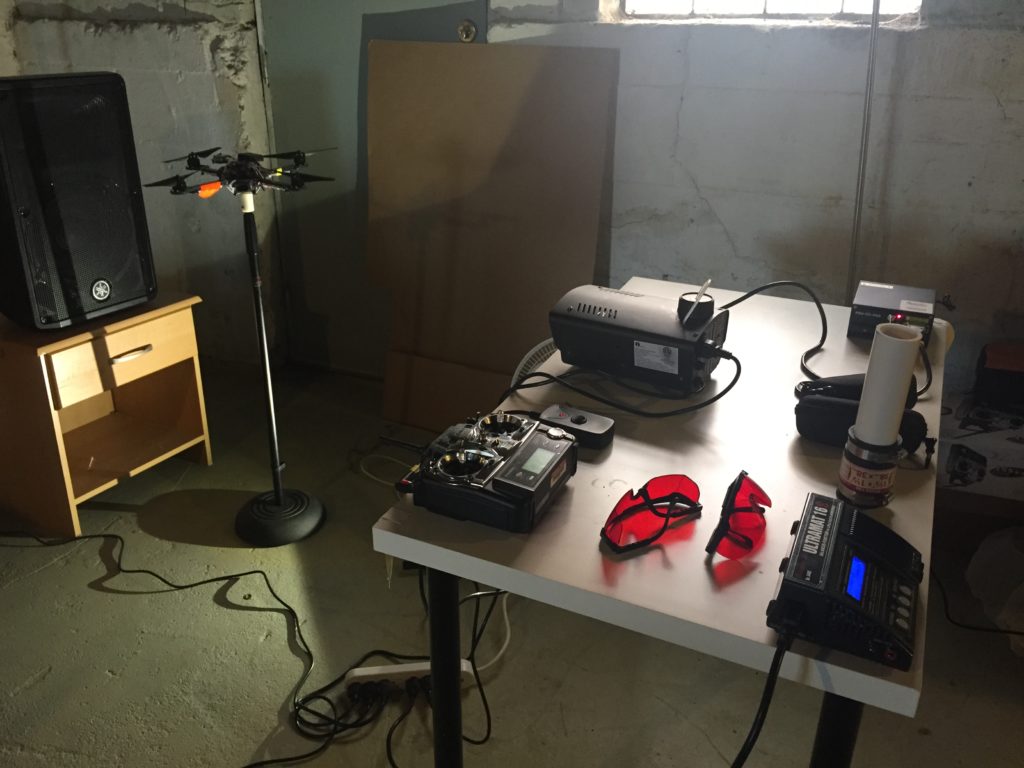
Using a combination of high power lasers and crystals, we created a sheet of laser to create a cross section on the drone. Using a high speed camera we captured the movement of the air flow. In the pictures below you can see a single point of air flow source. And in the video below that images you can see the air flow source form a fog machine.
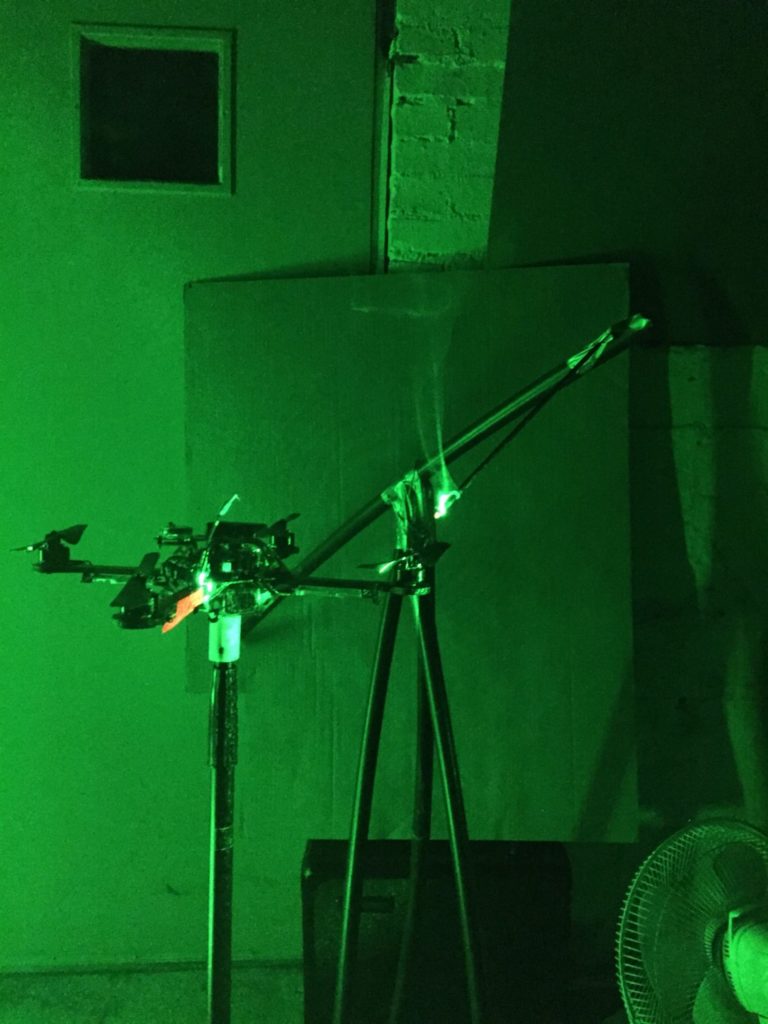
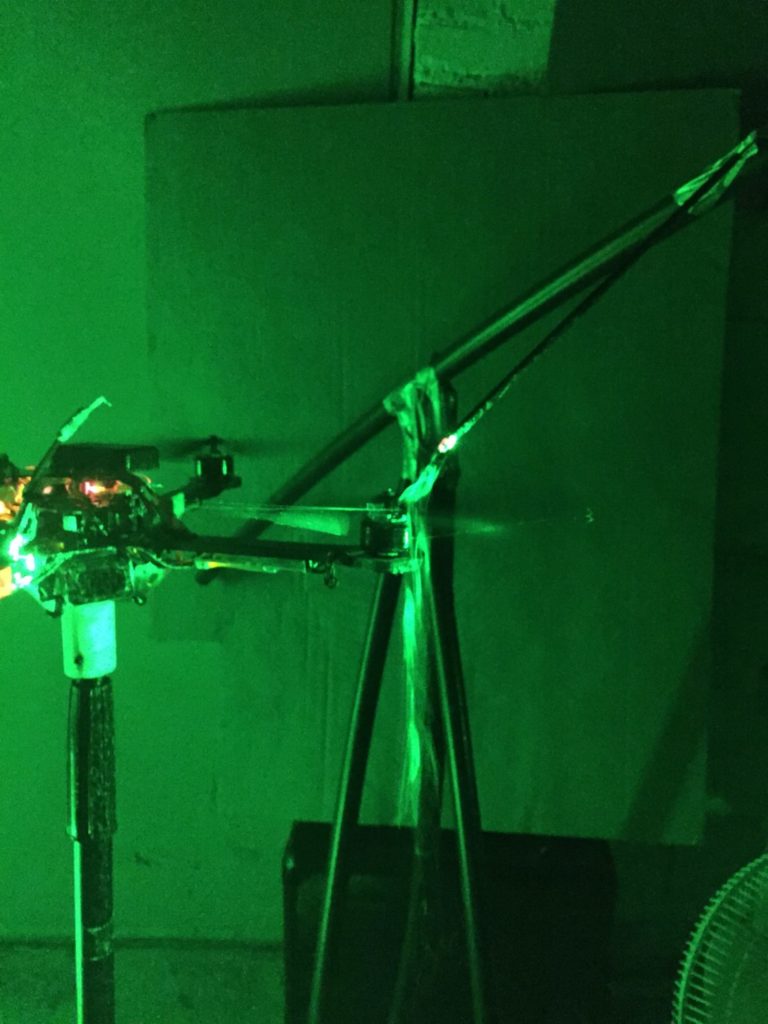
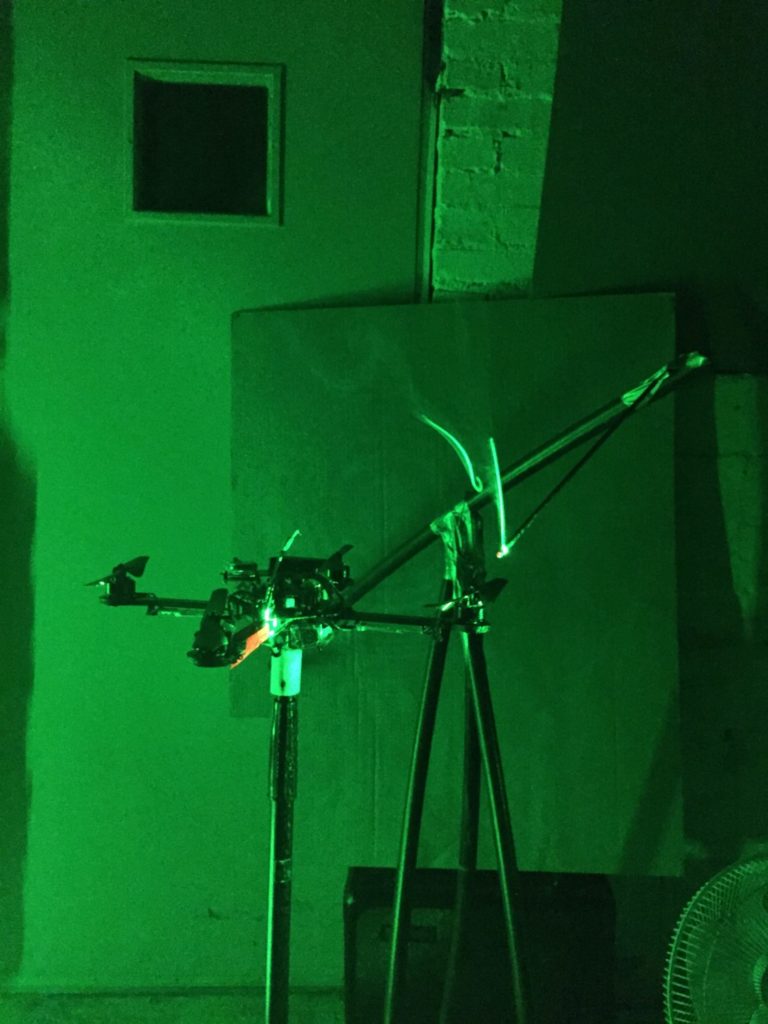
Here is a video of our testing rig in action, Watch as the airflow from the fog machines reaches the propeller of the drone:
You can download the poster, filled with more information and images, that was presented at Carnegie Mellon’s Meeting go the Minds in 2015:
Vortex Generators to improve flow
At the Aerodynamics Lab – University of Miami
In the summer of my Freshmen year in college I had the opportunity to work with the Aerodynamics Lab at the University of Miami – which was perfect sine I got to spend summer at home while studying aerodynamics. At the lab I was challenged with studying the effects of vortex generators on the flow uniformity of the RSMAS SUSTAIN Tunnel – which is used to simulate the effects of hurricanes by simulating hurricane type winds and water tides.
Using Gridgen – a computer software for designing meshes, I created vortex generators at one of the ends of the wind tunnel and then used a Linux terminal to run the simulation on a supercomputer.
Acoustics and Data Analysis
At the 3D Audio & Applied Acoustics (3D3A) Lab Research – Princeton
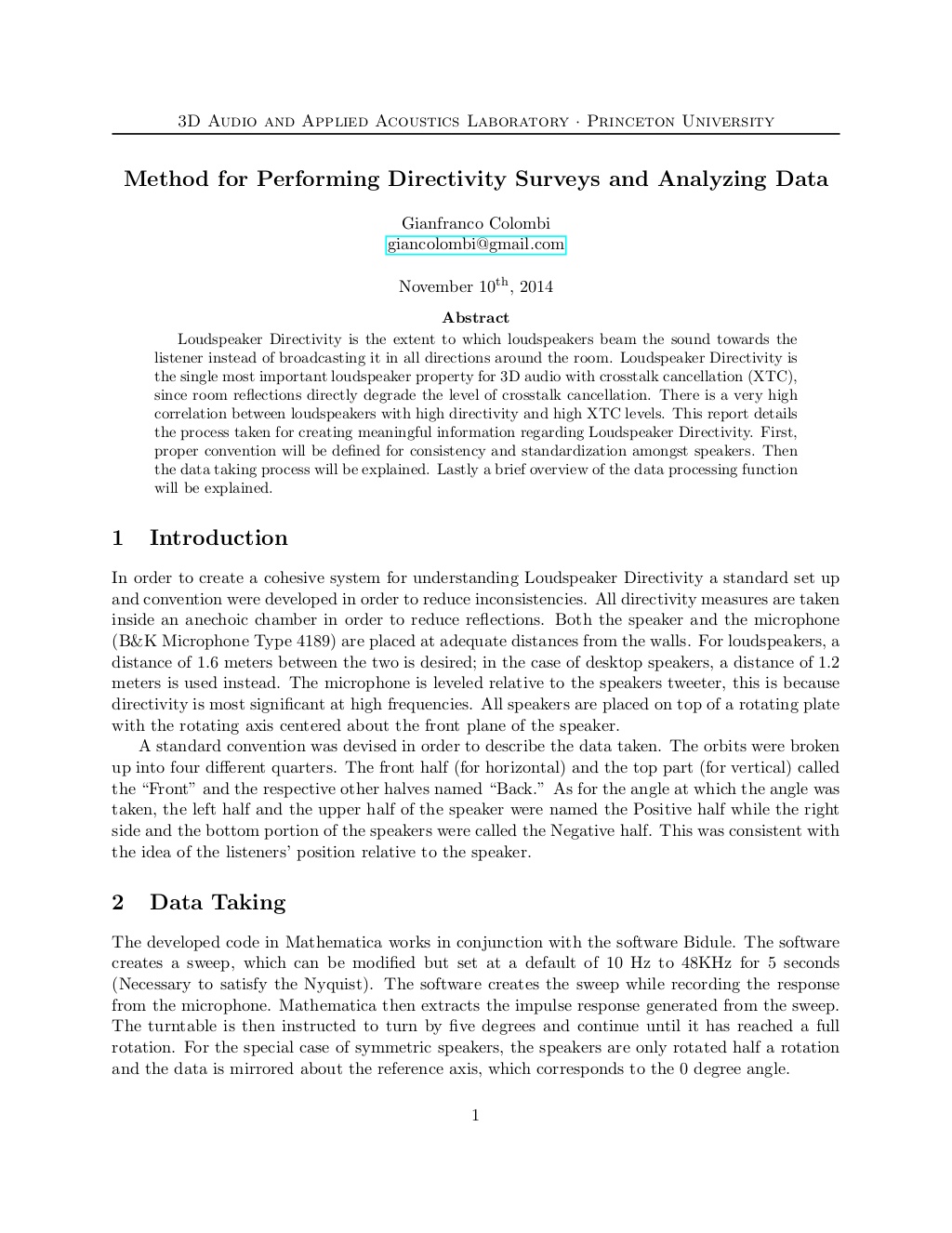
During my summer from Junior to Senior year of College I was offered an opportunity to work at the 3D3A Lab under the supervision of Professor Edgar Choueiri. Our research focused on the survey of loudspeakers, using a range of frequencies we studied loudspeaker directivity – the ability of a loudspeaker to transmit sound energy in a particular direction – inside an anechoic chamber.
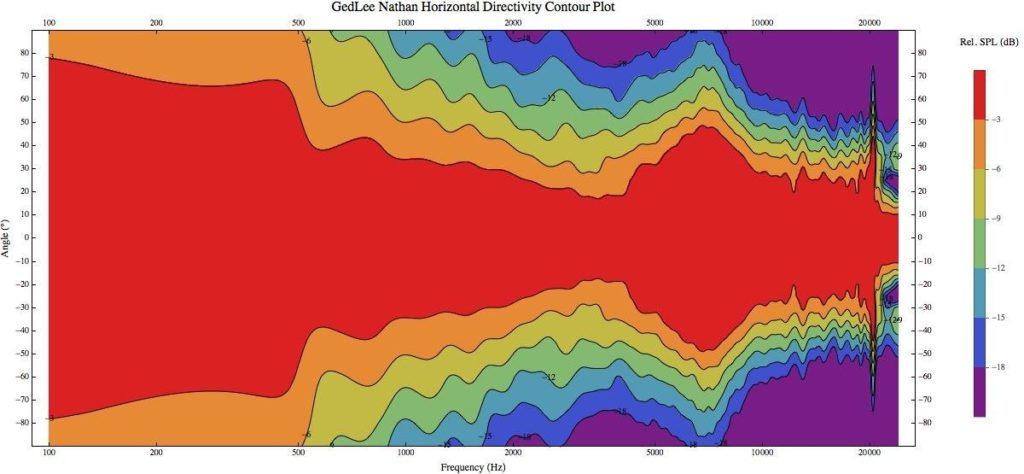
We had microphones at specific locations of the anechoic measure to measure the response of the speakers to the range of frequencies. Then, we would process the data to create directivity plots, directivity plots allowed us to see where the sound energy was going, we could see how direct the speaker was. With that data we developed an index for identifying speakers that would be more effective in directing sound energy than others.
Here is a copy of the paper:
And below is a sample of one of the the results:
Aerodynamics to Improve Fuel Efficiency
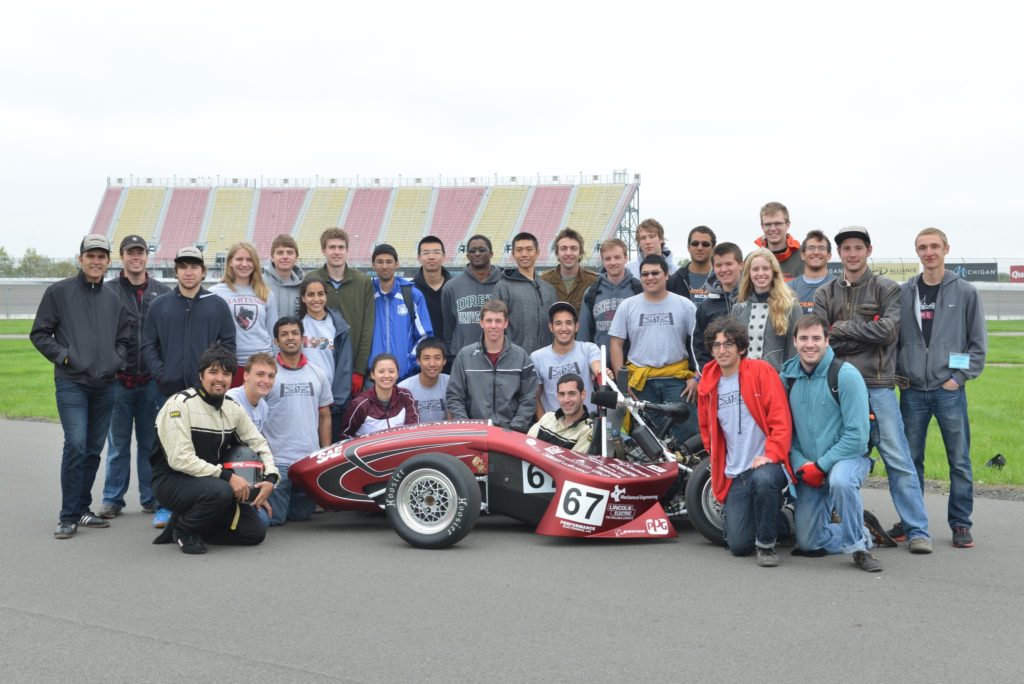
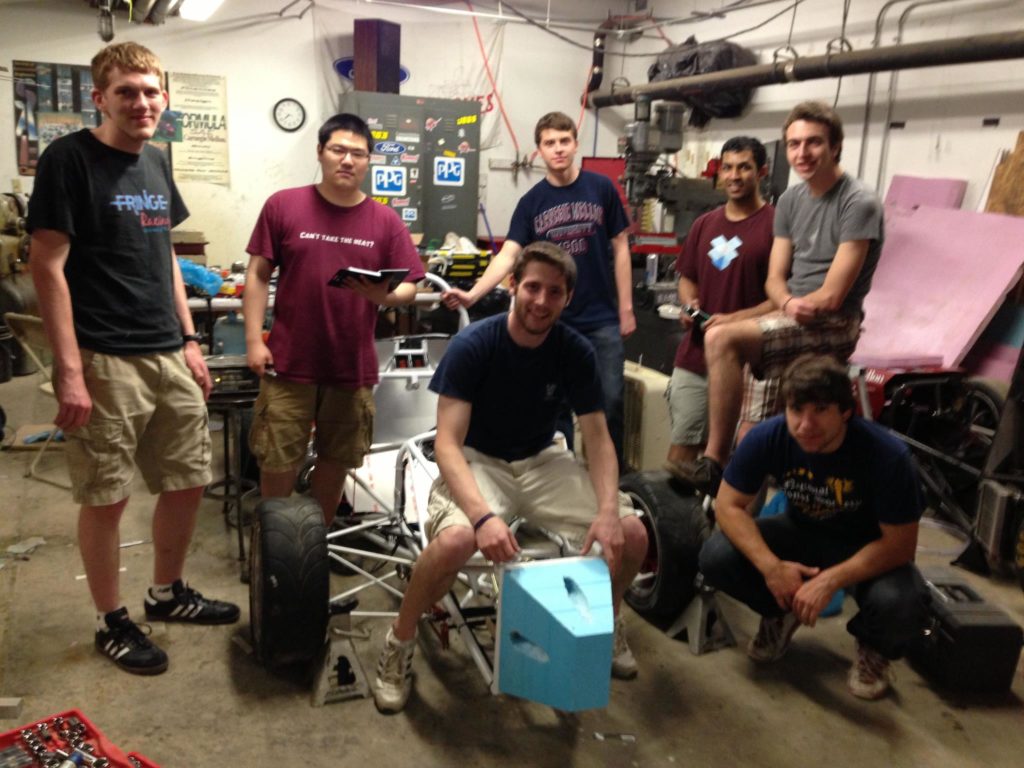
Carnegie Mellon University – Carnegie Mellon Racing Formula SAE
If you are looking for a new research assistant please reach out with opportunities for research in Frequencies, Vibrations, FFTs, and Data Acquisition and Processing.